Cardboard Goes Financial
For decades, trading cards were simple enough to understand. You bought a pack, ripped it open, hoped for something rare, and either played with the cards, traded them and those with some foresight stored them in a box until nostalgia made them valuable again. That time is now.
Pokémon, Magic: The Gathering, sports cards and newer anime-linked games, such as One Piece, have grown into a serious collectibles market. Graded cards, sealed boxes and rare prints are increasingly treated like alternative assets. PSA, or Professional Sports Authenticator, is one of the leading grading companies, assigning cards a condition score from 1 to 10, with PSA 10 representing “Gem Mint” condition.
A pristine Charizard is now culture, status, scarcity and speculation in one tiny sleeve, rather than just a slice of shiny cardboard. The cleanest examples can now command extraordinary prices: a PSA 10 1999 1st Edition Base Set Charizard sold for $550,000 at Heritage Auctions in December 2025. At the extreme end of the market, Logan Paul’s PSA 10 Pikachu Illustrator sold for $16.5 million in February 2026, setting a new record for the most expensive Pokémon card ever sold.

The timing helps. Pokémon turned 30 in February this year, and the Pokémon trading card game (TCG) is leaning into its own 30-year celebration. That gives the sector a powerful nostalgia cycle at the exact moment crypto is looking for its next consumer-facing meta. With the broader trading-card market estimated in the tens of billions of dollars, and some 2026 estimates putting the TCG market alone at around $15 billion, the sector may be reaching a new phase of innovation, with crypto potentially providing the infrastructure.
The Asset Case
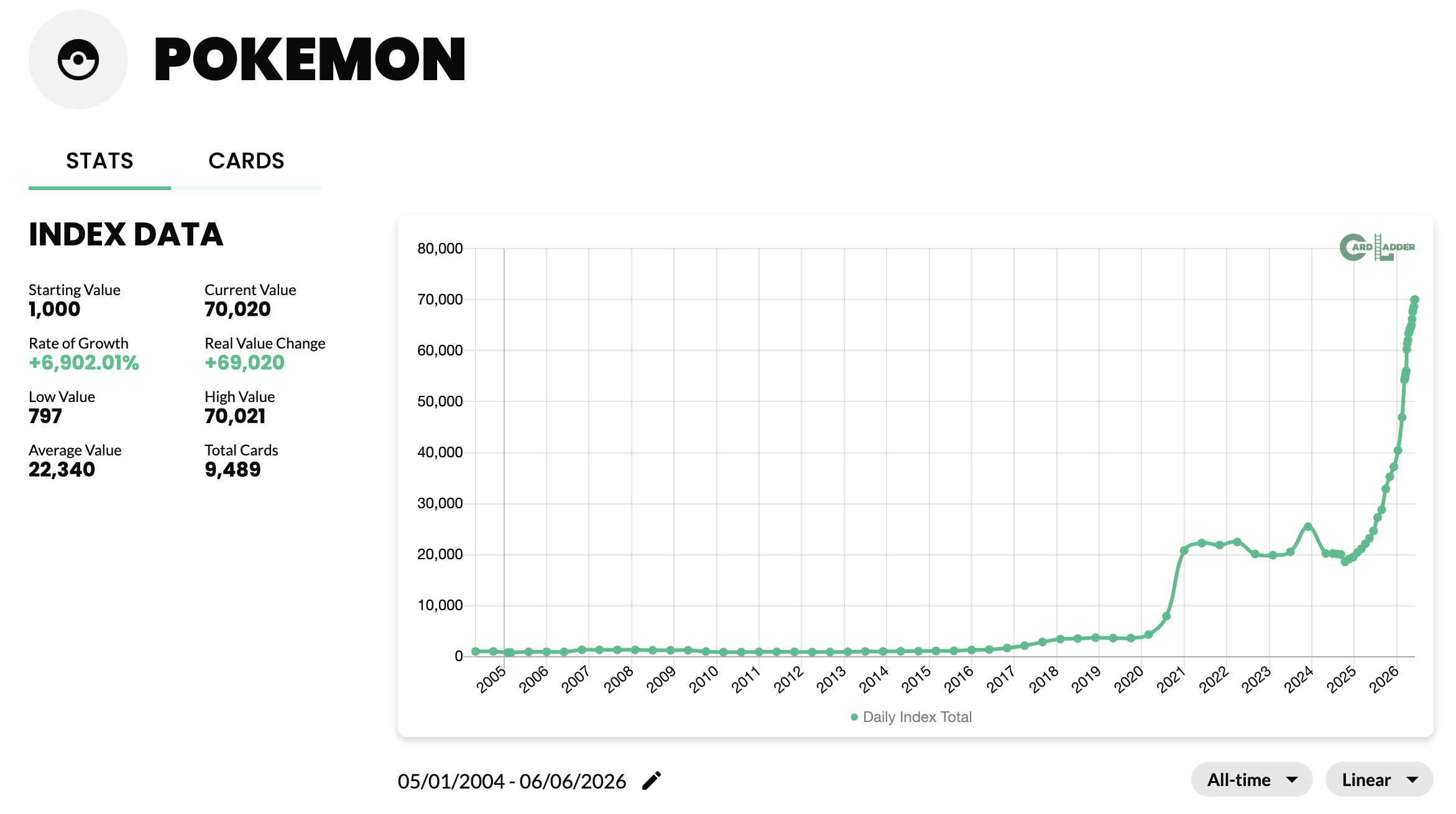
The asset case is also becoming harder to ignore as they become increasingly valuable. Card Ladder’s Pokémon Index, which tracks a curated basket of selected high-end Pokémon cards, has appreciated 6,902% since 2004, compared with 555% for the S&P 500 and 1,912% for the Nasdaq 100. Most of Pokémon’s gains have been in the past 6 years, with the surge starting in 2020, with index values going from 4,300 to 21,000 across the year. After some consolidation, another euphoric rise began in 2025 with the index trending from 20,000 and continuing to its all time high today of 70,000.
As with any speculative market, rising prices are often the best marketing campaign.
Nostalgia Tokenised
The reason this meta feels different is that the culture already exists outside crypto. Additionally, the cards being traded have their own collector-driven market, separate from crypto price action. For traders used to everything moving with BTC beta, tokenised cards offer a diversification play wrapped in familiar crypto rails.
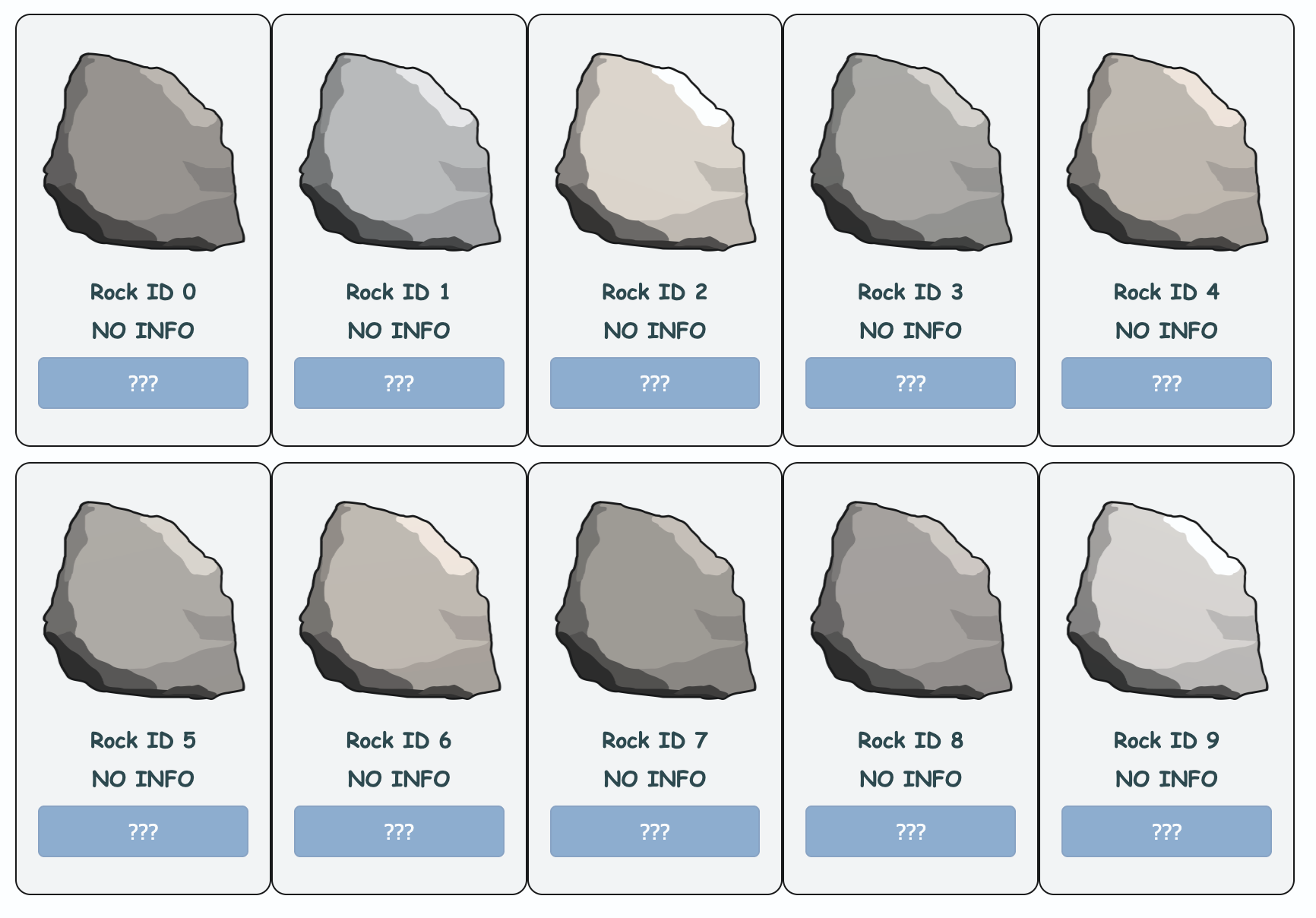
To many non-crypto users, NFTs felt forced and still do. The concept of “digital scarcity” is difficult to grasp if you are not already crypto-native. Why does a Bored Ape matter? Why is a JPEG of a rock worth $1.3 million? Why should anyone outside crypto care?
With trading cards, the pitch is easier: nostalgia tokenised.
Physical cards can be vaulted, represented onchain, bought, sold, opened through gacha machines and, if desired, redeemed and shipped to the owner. A market that once moved through eBay listings, card shops, grading companies and collector forums is being dragged into 24/7 liquidity.
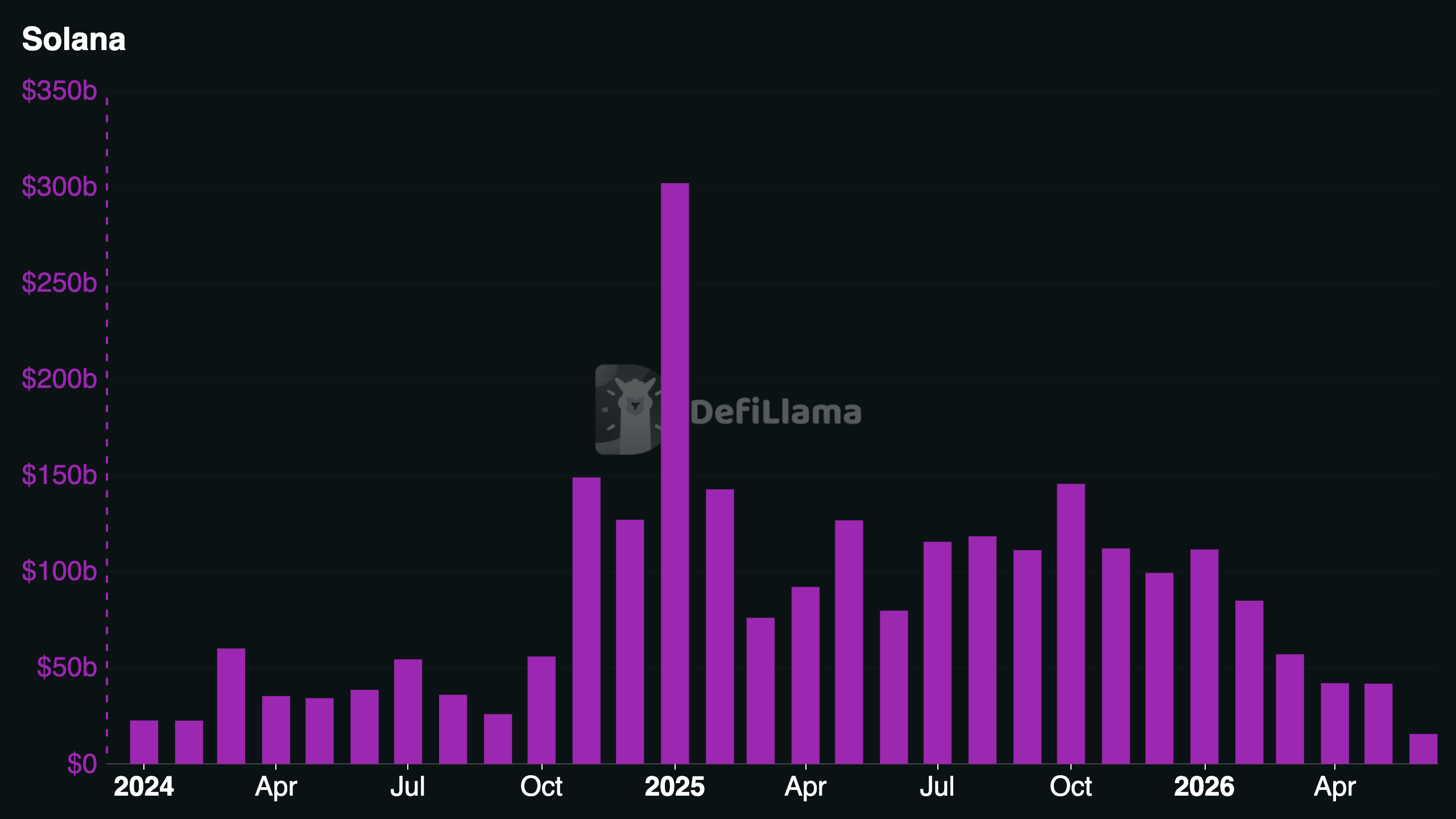
For crypto participants, after months of exhaustion in small-cap and the majority of crypto, TCG assets have offered traders something new to speculate on. Meme-token activity has cooled and Solana decentralised exchange (DEX) volumes have dropped from their January 2025 $300 billion mania high, recording their slowest month since September 2024 at just $41.8 billion across May 2026.
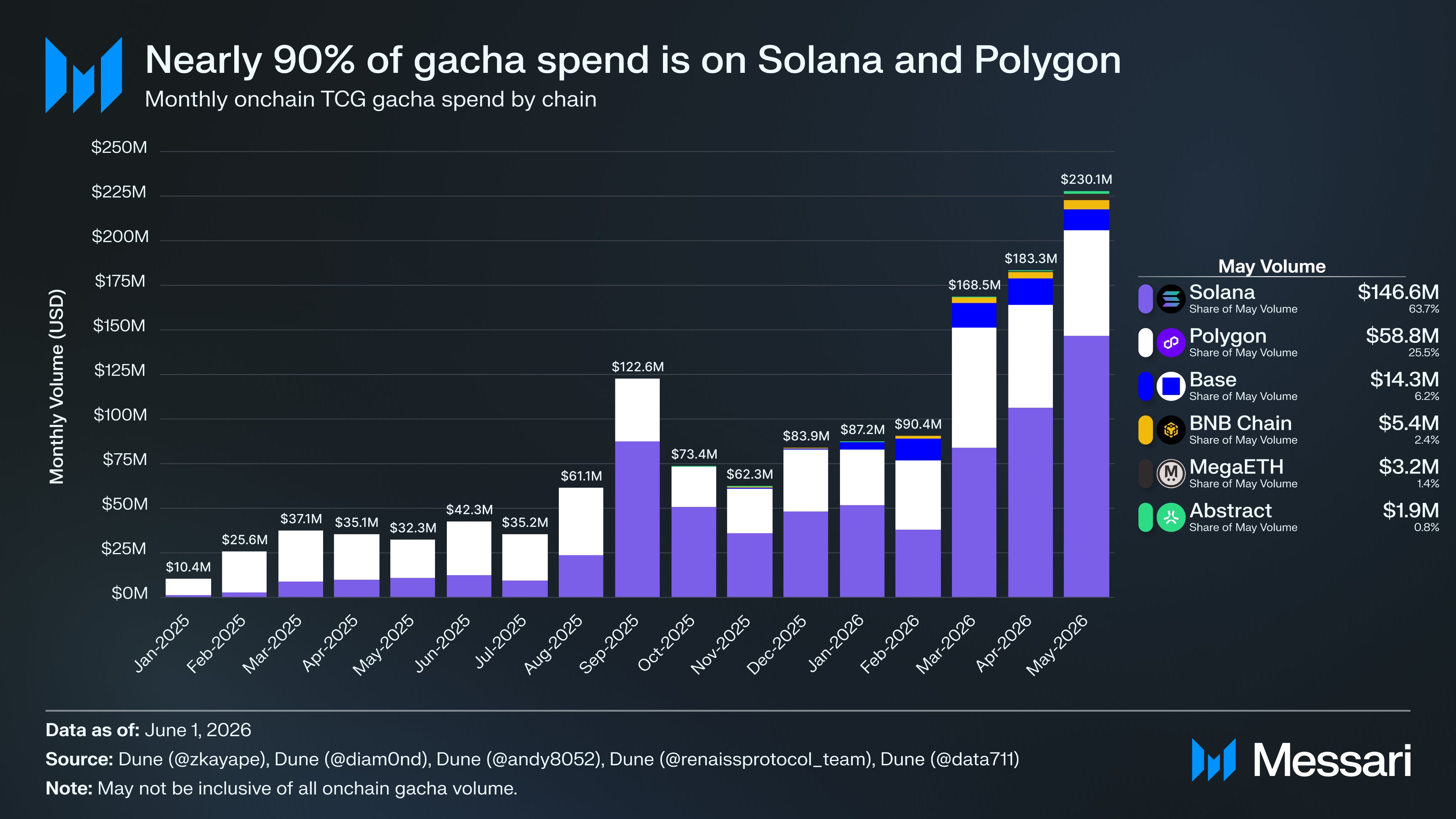
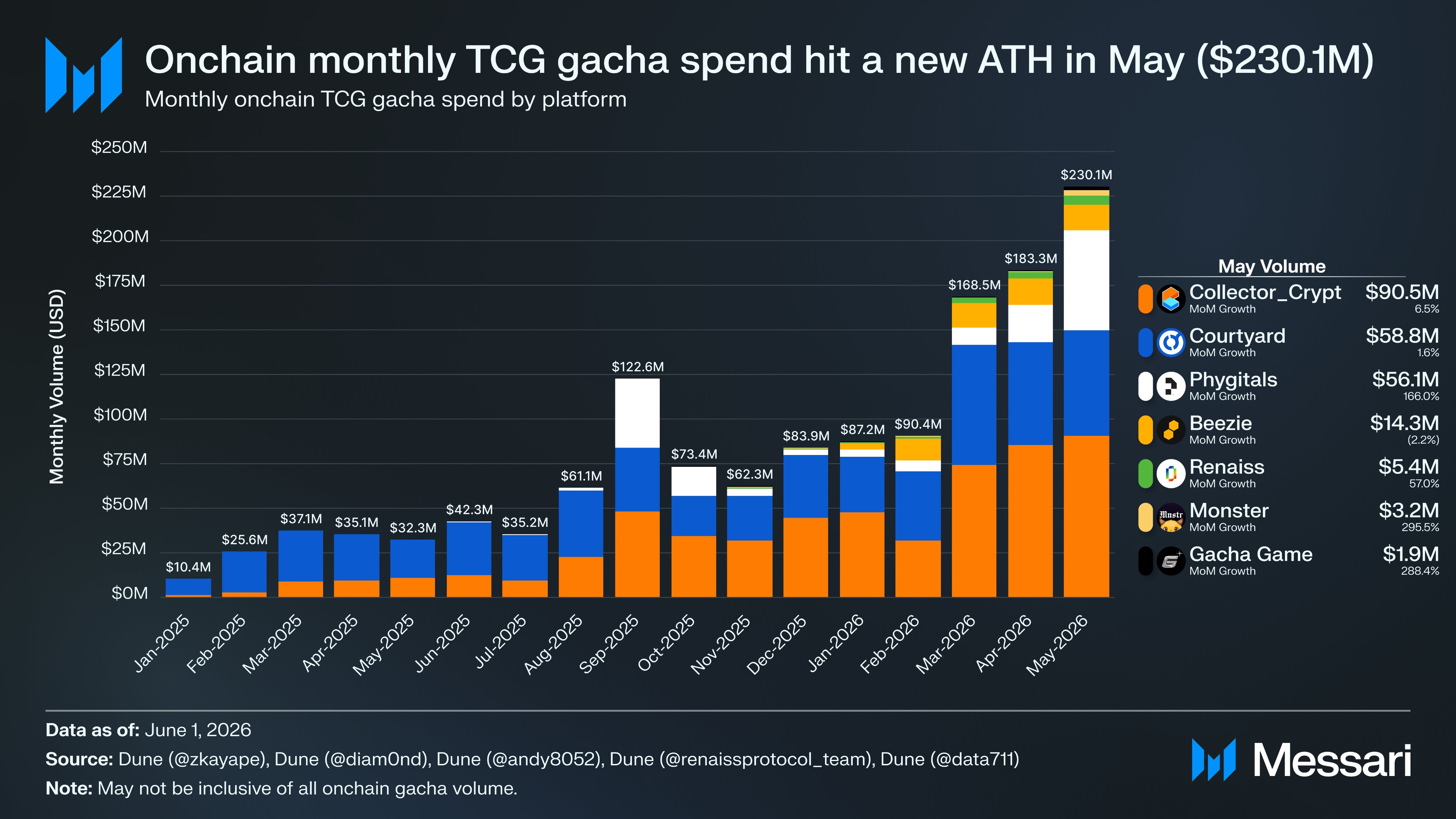
The TCG sector is increasingly becoming one of the more interesting pockets of onchain activity and 64% of May’s gacha sales took place on Solana.
What Is Gacha?
“Gacha” means a randomised reward mechanic. You pay to open a pack, spin a machine or enter a draw, and the outcome may be common, rare or extremely valuable. It is the same psychological loop behind mobile gacha games, FIFA Ultimate Team packs, Counter-Strike cases and loot boxes: the user knows most outcomes will be ordinary, but the thrill of maybe hitting something rare keeps them coming back. In essence, the same addicting mechanic as meme-token trading, but potentially less risky due to a lower chance of an overnight 99% rug pull.
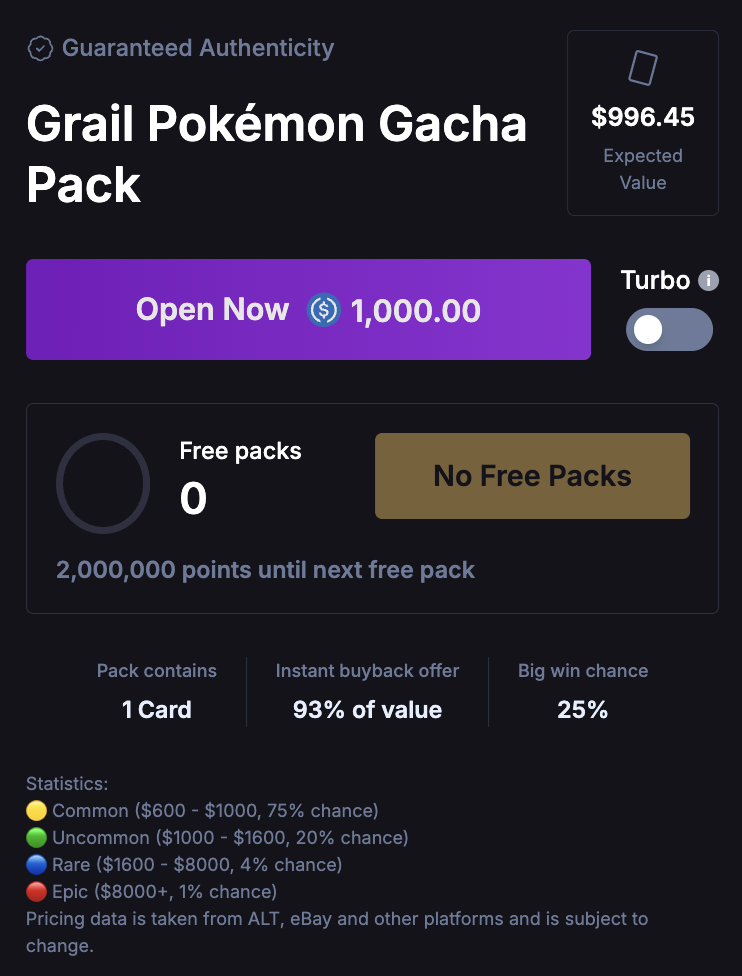
Onchain collectible marketplaces applies that mechanic to real graded cards. Instead of opening a purely digital loot box, users open tokenised packs backed by physical inventory. Pack pricing varies by product from $10 to $5,000 categories with common pulls to legendary cards. Users can choose different levels of risk and reward, from cheaper openings to higher-stakes packs with more valuable potential pulls.
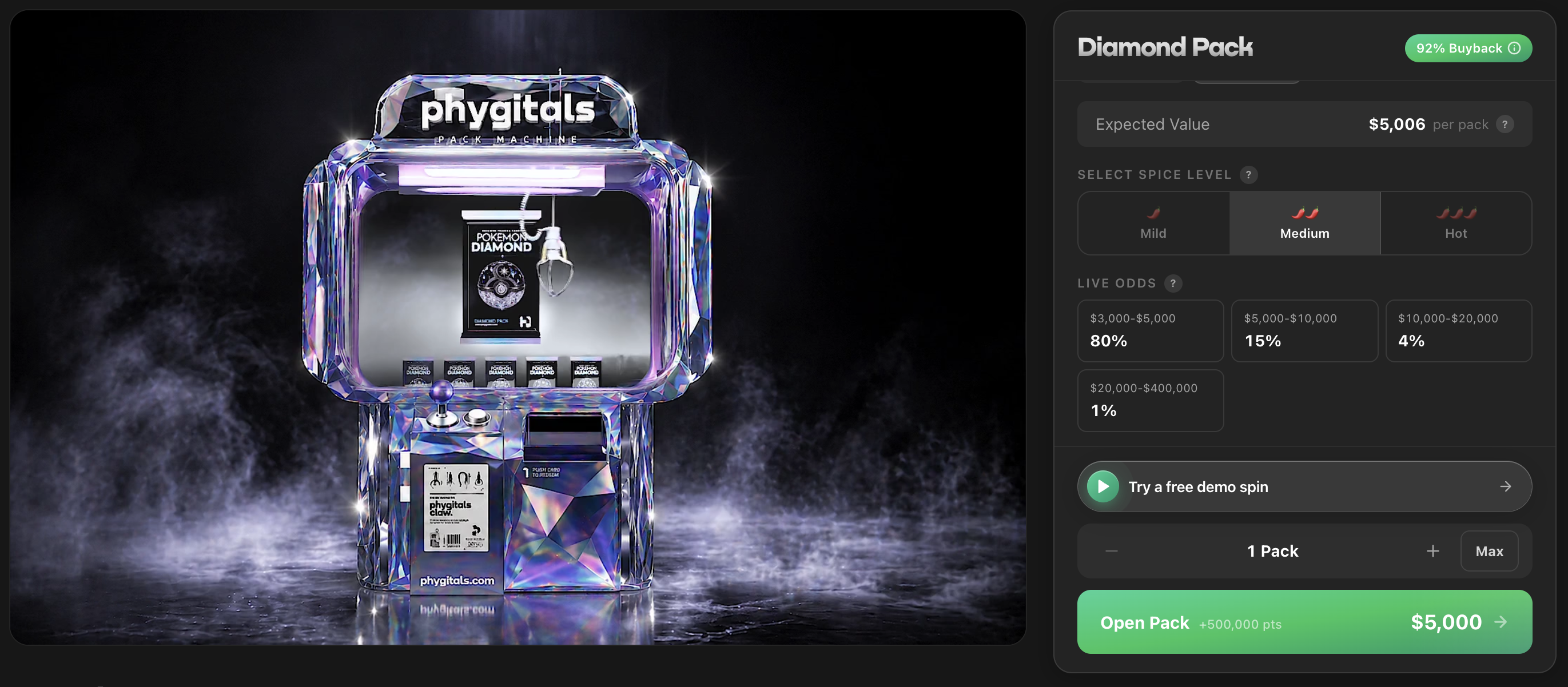
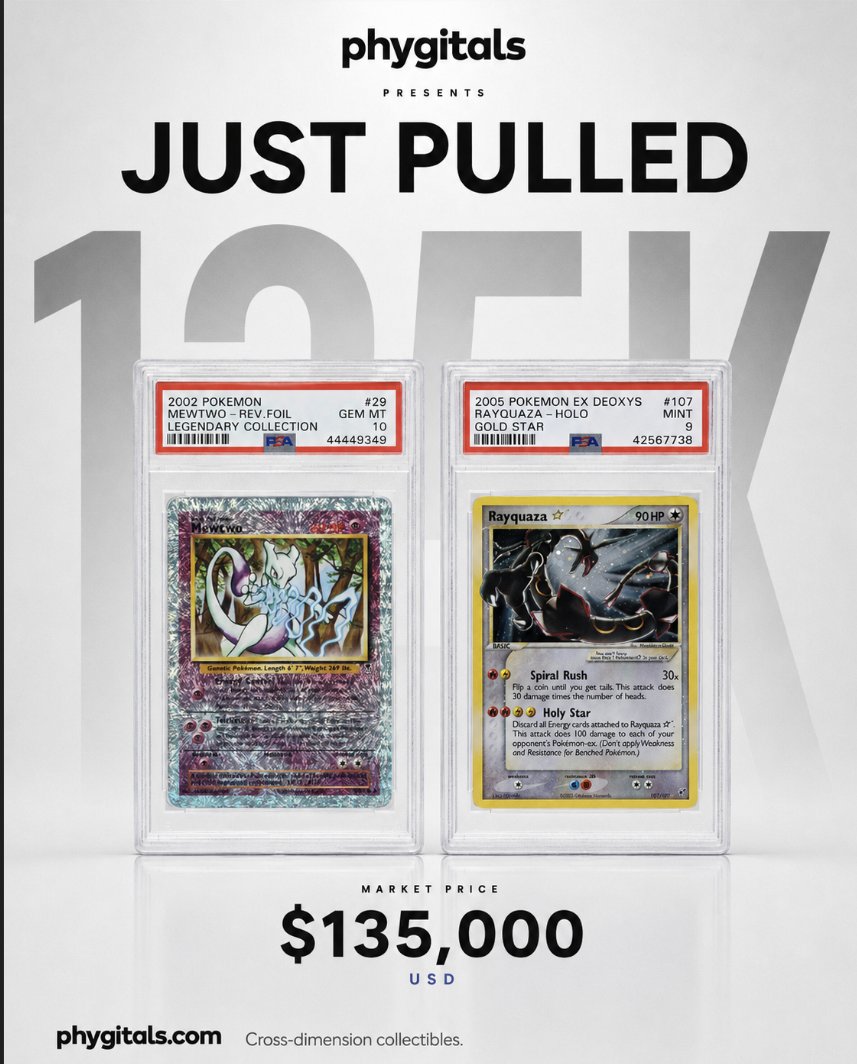
On Phygitals, one user recently pulled two cards worth $135,000 in total from two $5,000 packs. Not bad.
Onchain marketplaces such as Collector Crypt, Courtyard and Phygitals take real graded cards, store them, and turn them into redeemable digital assets. The user does not need to understand crypto ideology to understand the product. They are opening packs. They are chasing rare pulls. They are collecting Pokémon cards. Crypto simply changes the rails underneath.
The Numbers
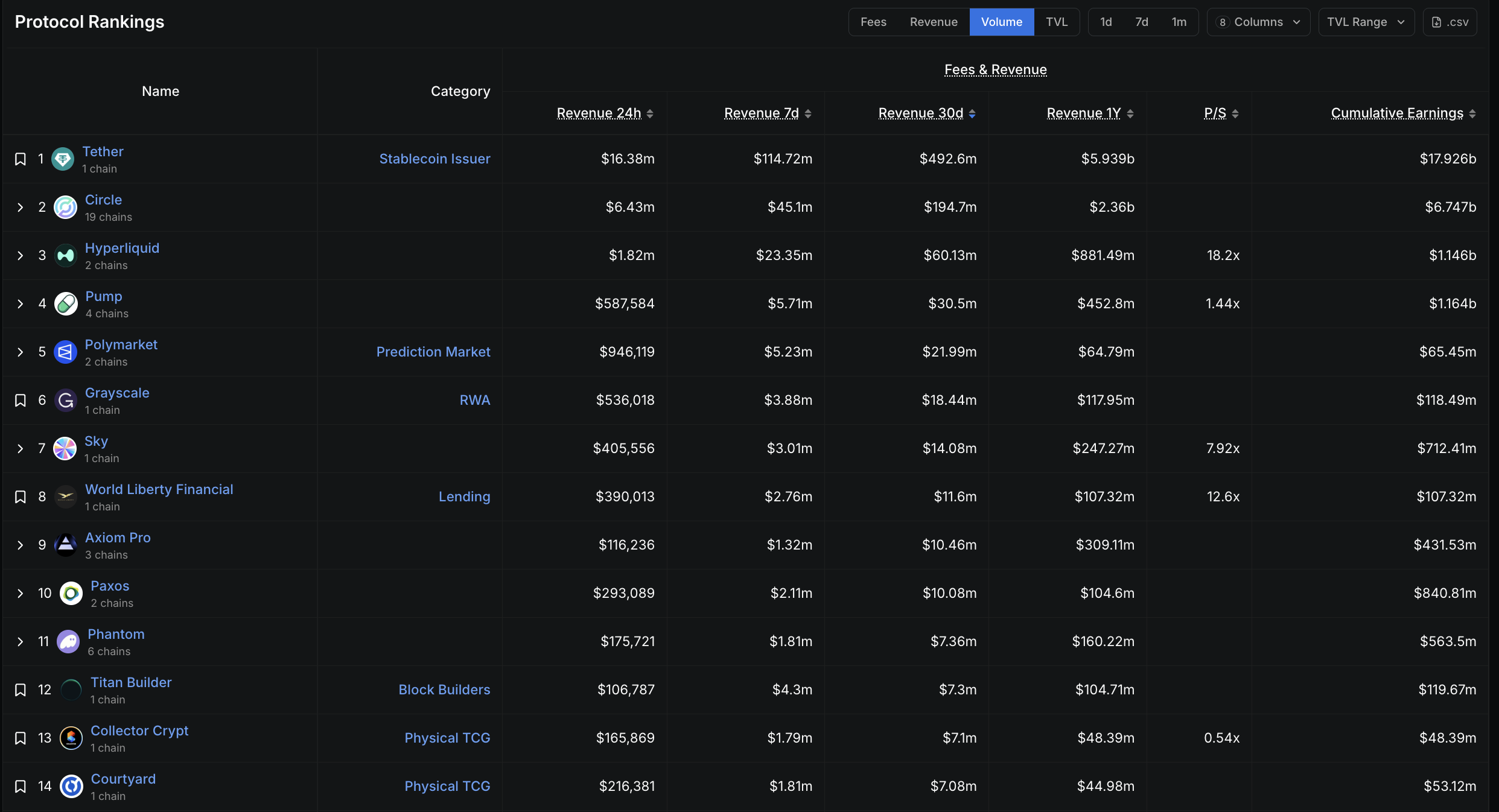
The numbers explain why traders are paying attention. According to Messari, onchain monthly TCG gacha spend hit a new all-time high of $230 million in May, a 164% increase from January’s $87 million and up 612% compared to May 2025. Collector Crypt made up 39% of May’s 2026 figure, with Courtyard and Phygitals accounting for 26% and 24% respectively. That distribution, combined with the pace of growth, shows no single platform has fully pulled away yet.
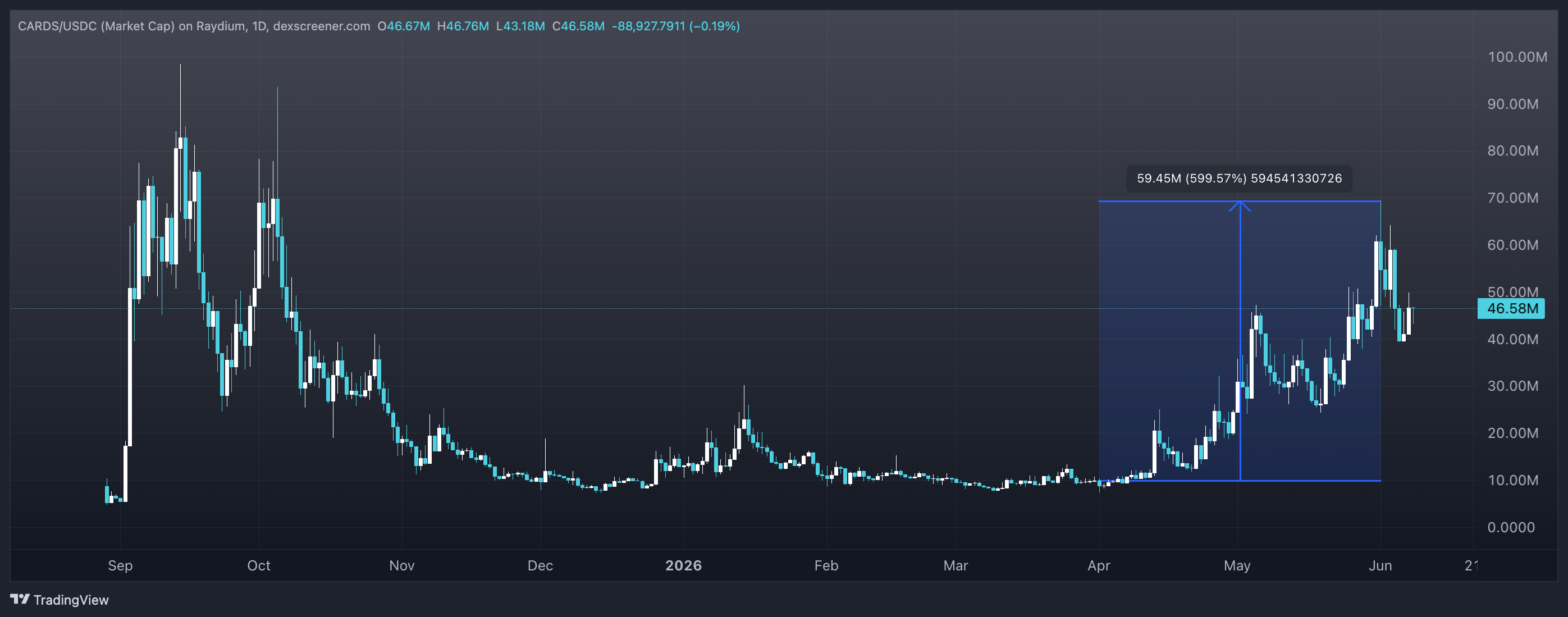
Currently it is Collector Crypt leading, and the price action in its token, CARDS, over the past two months reflects the increasing interest in gaining exposure to the sector. CARDS has become one of the cleaner ways for crypto traders to speculate on the TCG trend itself. Rather than buying one individual card, traders can buy exposure to the platform, its gacha volume, its marketplace activity and the broader idea that collectibles can become onchain financial assets.
CARDS: The Picks-and-Shovels Trade
CARDS is a “picks and shovels” trade on the current TCG meta. After activity in the sector increased during March, CARDS rallied 600% since the start of April to a 2026 high of nearly $70 million in circulating market cap. An impressive rally, but still shy of its $98 million all time high when the token first launched back in August 2025. In the recent market downturn, it has partly retraced its 600% move to around $50 million market cap. The recent pullback makes its current valuation even more interesting when compared with the revenue the platform is pulling in.
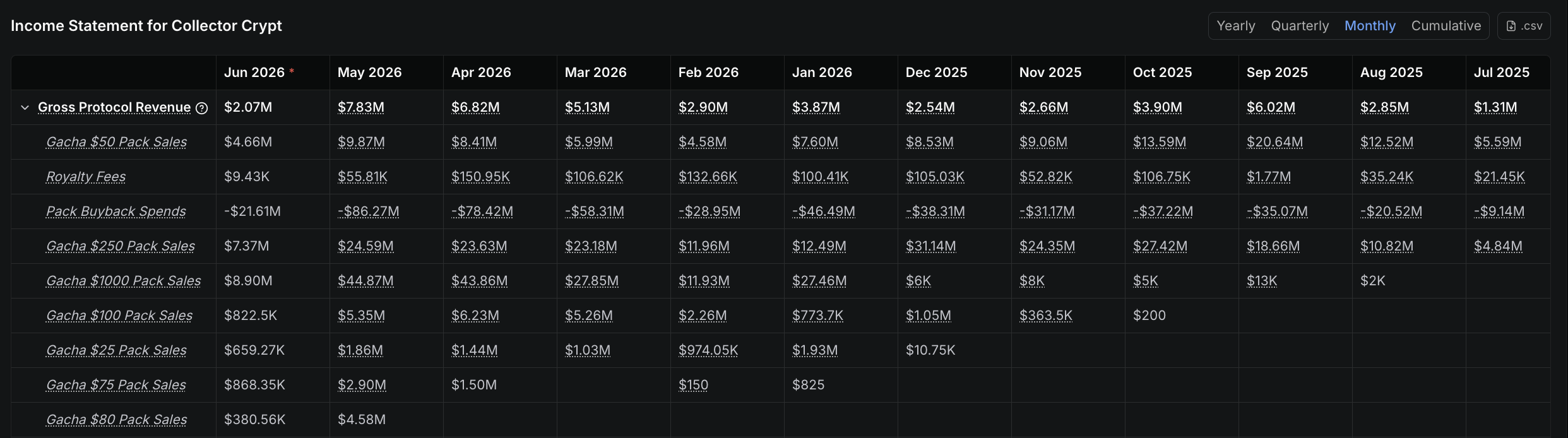
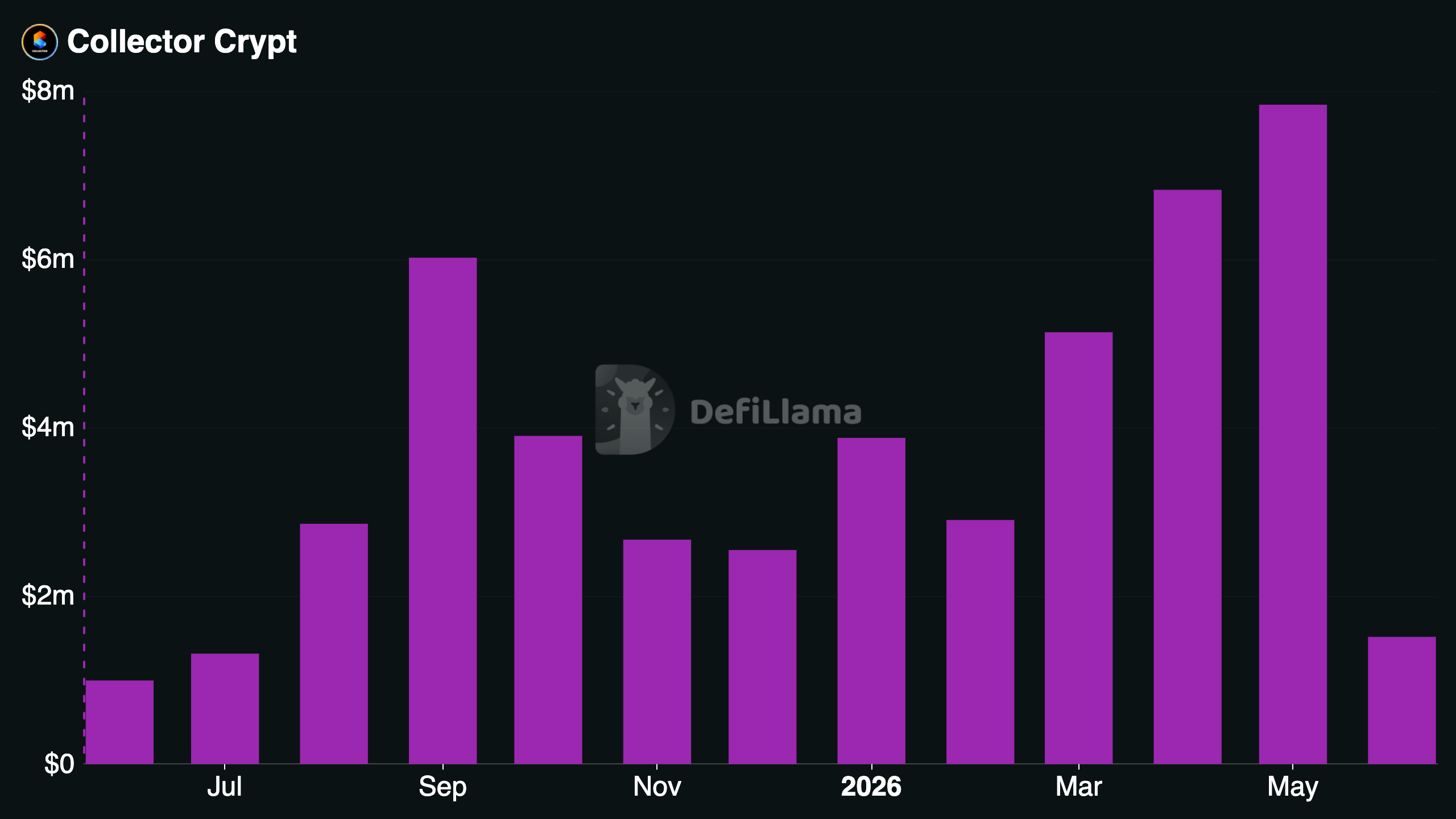
According to DefiLlama, Collector Crypt generated $5.1 million in net protocol revenue in March, $6.8 million in April and $7.8 million in May from its gacha pack model. These figures reflect gacha pack sales after deducting pack buyback spend, rather than traditional company profit. In May, pack buyback spend also reached a new high of over $86 million, demonstrating the increasing flows through the platform.
In May, the larger gacha packs, $250 and $1,000, drove nearly 75% of gacha pack sales volume. This suggests the platform’s activity is being heavily driven by higher-stakes users willing to risk larger amounts for the chance of more valuable pulls, tapping into a familiar crypto-native appetite for volatility, asymmetric upside and speculation.
Annualising the average net protocol revenue from March, April and May gives just under $80 million. On a circulating market cap to annualised net protocol revenue basis, CARDS trades at around 0.5x.
On the surface, that looks attractive, especially compared with Hyperliquid, the booming DEX and one of the best performing large-cap tokens prior to the recent correction. According to DefiLlama, Hyperliquid currently trades at around 18x using the same market cap to annualised net protocol revenue ratio.
The Value Accrual Question
Value accrual is the key issue for CARDS. Collector Crypt is already producing meaningful revenue, but the current value loop runs mainly through inventory growth opposed to being directed to its token. Currently, revenue funds more physical card acquisitions, which improves the marketplace and gives the gacha machine deeper inventory. Holders receive discretionary rewards such as free pack opportunities, while buybacks remain the major unresolved catalyst. The team has said buybacks are still coming, although timing depends on cash needs, operating costs and the buildout of its vaulting operation.
This is where the Hyperliquid comparison becomes useful. Hyperliquid’s token has performed well partly because token holders understand the value loop: the protocol earns fees, and 99% of those fees flows into market purchases of HYPE through the Assistance Fund. Token holders know that as long as trading volumes are maintained, there will be a consistent bid on the token.
This matters even more during volatile bearish periods (like now), when traders use perpetual futures to hedge, short or try and catch the bottom of the market in size. Higher activity means more trading fees, and more fees mean a larger buyback flow into HYPE through the Assistance Fund.
For example, over the past week, $24 million worth of HYPE was bought and burnt. Currently, the Assistance Fund has bought back over 46 million tokens, ~4.6% of the total supply or ~15% of the circulating supply and now worth over $2.8 billion.
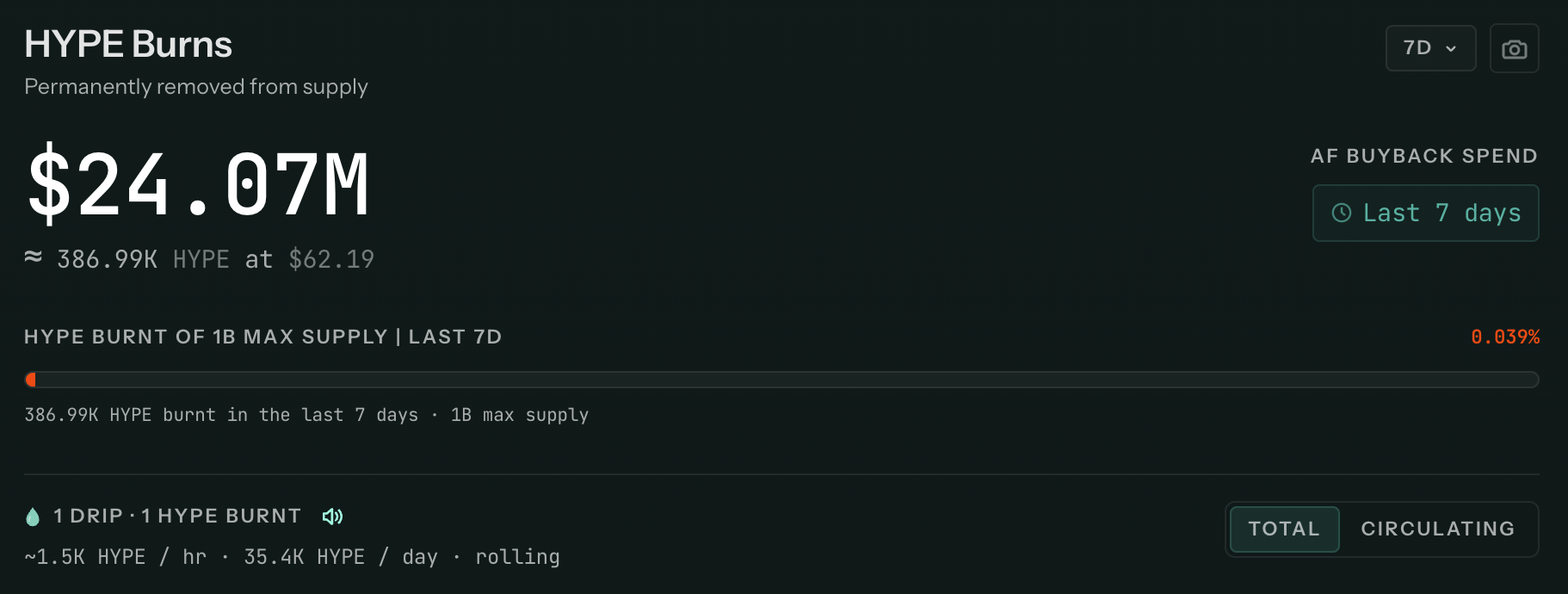
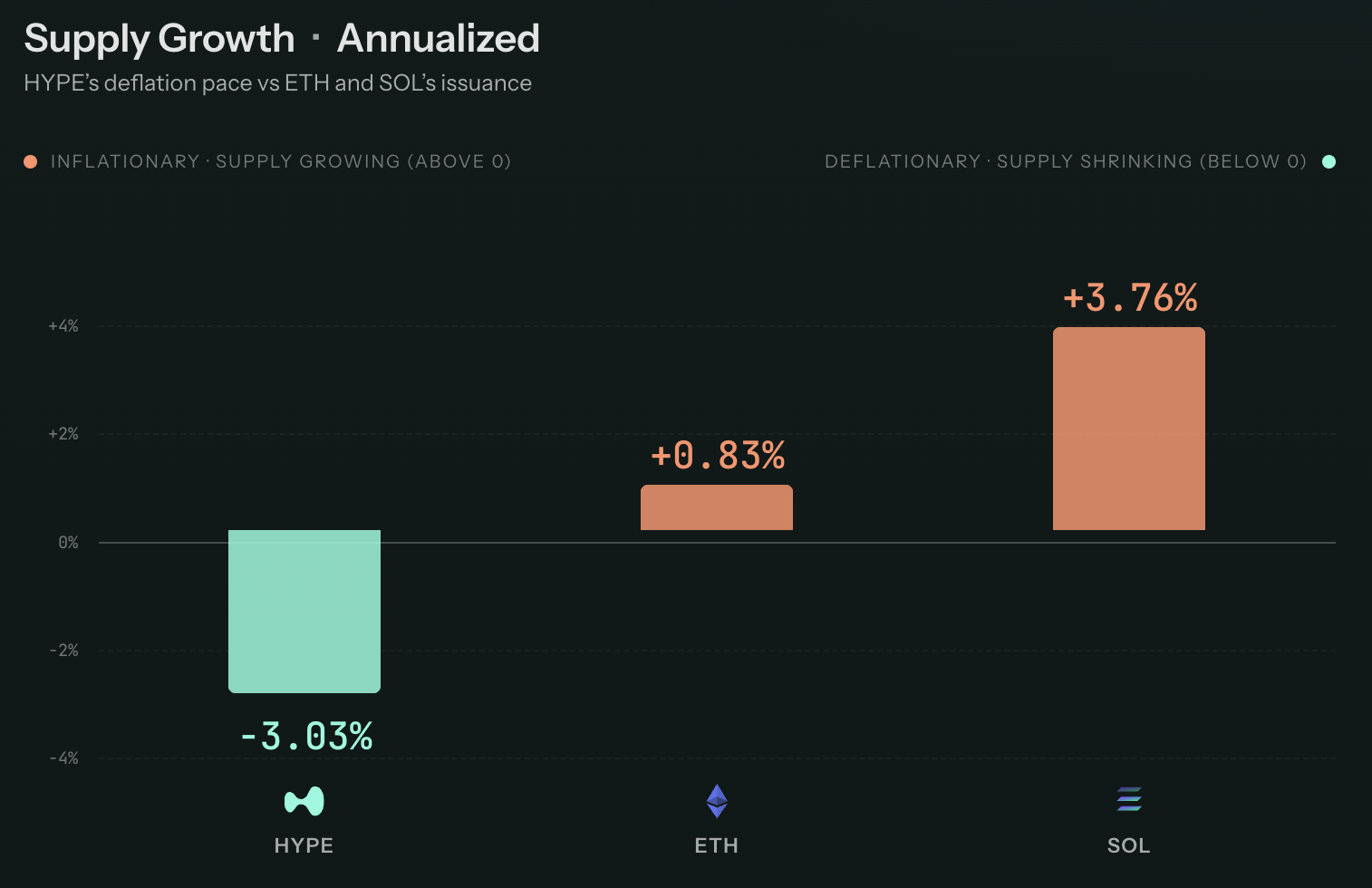
This leads to a current annual inflation of -3%, compared to +0.83% for Ethereum and +3.76% for Solana.
Hyperliquid has a clear and visible fee-to-buyback loop. Collector Crypt has to balance token accretion against the need to keep acquiring cards, funding operations and deepening inventory. As a result, any CARDS buyback programme may be less predictable than HYPE’s Assistance Fund, at least until the platform reaches greater scale.
The Inventory Problem
The complication is that Collector Crypt’s business model is capital intensive. Gacha only works if the platform keeps buying desirable cards for users to open. Revenue can be reinvested into inventory, vault operations and liquidity. More inventory improves the product, deepens the marketplace and makes the gacha experience more attractive. Buybacks would give holders a clearer value-accrual mechanism and could make the token more reflexive.
That creates a real strategic trade-off. Aggressive buybacks may support the token price in the short term, but they could also slow the platform’s ability to acquire cards and scale the user experience. For now, reinvesting into inventory arguably strengthens the product first. Buybacks become more powerful once the marketplace has enough scale and recurring demand to support both growth and token accretion.
However, Phygitals may have mitigated this constraint. Its new Repacks feature allows users to create and sell their own packs using cards on Phygitals, with their own determined odds and expected values. That shifts part of the inventory burden away from the platform itself. Instead of Phygitals needing to source every desirable card directly, creators, collectors, card shops and influencers can bring inventory and audience into the system. If this works, the winning model may be less about one platform owning the deepest vault and more about turning the wider collector base into a distributed supply network.
A New Bid for Cards
There may also be a feedback loop forming between onchain gacha demand and the underlying card market. Platforms like Collector Crypt, Courtyard and Phygitals need a constant flow of graded cards to keep digital pack openings attractive. If users are spending hundreds of millions of dollars a month opening tokenised packs, those platforms need inventory behind the experience. That creates a new type of buyer in the physical market: crypto-native platforms sourcing cards for gacha liquidity.
Crypto is not single-handedly supporting the entire Pokémon card market. Pokémon demand was already strong, the 30th anniversary cycle is already a major tailwind, and resale pressure remains intense even after huge increases in card production. Onchain gacha adds another bid for desirable graded inventory. If these platforms keep growing, they may help support prices in the specific parts of the market they need most: liquid, recognisable, graded cards that make a digital pack feel worth opening.
The Buyback Loop
There is also a second liquidity loop inside the model. The instant buyback mechanic featured on these platforms lets users sell unwanted pulls back to the platform, typically around 90% of market value, giving users and platforms immediate dollar and card liquidity respectively. A disappointing pull can be sold back, traded on the marketplace, held, redeemed, or recycled into another pack via Repacks.
For the platforms, the buyback spread may help offset risk and keep inventory circulating inside the ecosystem. Bought-back cards may also return to future gacha supply, although the exact path of each card is not publicly clear. If buyback pricing feels fair, it supports activity. If users feel pushed into repeatedly selling at a discount to chase another rare pull without at least breaking even, the same mechanism can start to feel extractive and more like a casino, which arguably it is.
Waiting for the Flywheel
There is logic Collector Crypt waiting to turn on any buyback mechanism for CARDS. While the market is young, platforms may prefer to reinvest into inventory, liquidity and user growth. Right now, as the sector is still relatively small and quickly growing, Collector Crypt has good reason to keep reinvesting their revenue back into acquiring more cards, improving liquidity and trying to become the go-to place to trade, expanding on that 39% share of gacha monthly spend.
If Courtyard, Phygitals or another competitor launches a value-accretive token to capture crypto attention and capital, Collector Crypt may then have more reason to turn on its own token flywheel. This is likely what the team behind CARDS is waiting for: keep growing the product until a competitor releases their own reflexive token, then turn on the accretion pipe from a stronger position. Until then, CARDS trades somewhere between an infrastructure bet, a revenue multiple trade and a narrative asset.
The Bull Case
The bull case is real. Card markets are fragmented, slow and full of friction. Buyers worry about authenticity, condition, custody, shipping and liquidity. Crypto can offer instant settlement, transparent ownership, global access and programmable markets. Fractional ownership also becomes possible, allowing smaller capital buyers to gain exposure to more expensive collectibles. For once, the industry is not trying to convince people that digital scarcity matters. It is attaching digital rails to scarcity people already understand.
The fee difference is also meaningful. Collector Crypt’s normal marketplace sales carry a 2% seller fee. If a user wants the physical card shipped to them, redemption carries an 2% additional fee of the card’s insured value, plus shipping and handling. On eBay, private sellers can pay a final value fee of around 13% of the total sale amount. Tokenised marketplaces still come with custody, platform and liquidity risks, but have faster settlement, lower trading costs and fewer physical handoffs.
The Bear Case
The bear case is partly cultural. For many collectors, opening packs is physical. They want the friction of their fingers pulling open the plastic, the slow reveal of each card, the slightly sweaty hands, the quickened heartbeat, the tiny theatre of the pack opening itself. Even admiring the finer details of the physical card is a unique part of the experience. The online version loses some of that sensory theatre.
The creators most likely to adopt it first are probably gambling-adjacent streamers, casino-style content creators and crypto influencers rather than traditional collectors. The product is built for reaction clips. That makes it highly shareable, but also changes the vibe and becomes framed less as collecting and more as entertainment gambling.
That creates a strange tension for these platforms. The fastest growth may come from creators who understand how to turn randomness, risk and reward into content, but long-term credibility still depends on making the product feel collectible, fair and tied to real card demand. If the content layer becomes too casino-coded, traditional collectors may stay away. But, will they be attracted in the first place due to the lack of the sensory physical experience? If it can balance spectacle with genuine collecting, gacha openings could become a new digital-native version of the pack-opening video.
But it is 2026, and these mechanics have already proven their demand across gaming for well over a decade, from FIFA Ultimate Team’s packs to Counter-Strike’s weapon cases and skins. People already engage with digital randomness. The harder task is making tokenised TCG platforms feel collectible rather than purely extractive.
Fractional Ownership
Fractional ownership is also starting to appear through tradable tokens. Meteora and Sunrise recently launched SV151, described as the first “Dynamic Asset” on Solana: a token linked to sealed Pokémon Scarlet & Violet 151 packs. The launch was structured around raising USDC to buy sealed packs for the reserve, rather than each user individually buying and storing product themselves. Those physical packs are held by a custodian, while SV151 gives traders onchain exposure to that reserve.
The longer-term idea is more circular: deposit real packs to mint tokens, burn tokens to redeem physical packs, and use onchain liquidity to price sealed product in real time. That matters because sealed packs are easier to standardise than individual graded cards. A rare vintage card can vary heavily based on grade, condition, serial number and collector preference. A sealed Scarlet & Violet 151 pack is simpler to group, store and price at scale.
Cardboard Collateral
Decentralised exchange, Jupiter, recently launched public beta of Offerbook now lets Collector Crypt and Phygitals users borrow against their tokenised TCG cards on Solana through fixed-rate, fixed-term peer-to-peer loans. Borrowers can use cards as collateral, while lenders compete to offer terms such as loan size, duration, APY and loan-to-value. Jupiter has also said every card is verified onchain by Collector Crypt and Phygitals before it becomes collateral on Offerbook.
These integrations demonstrate crypto’s ability to unlock previously stagnant assets for asset owners, whilst creating a new source of potential yield for lenders. A vaulted card no longer has to sit idle or be sold to access liquidity; it can become collateral for a loan, while lenders earn yield by underwriting card-backed credit risk.
TCG Perps
“If crypto can tokenise cards, why wouldn’t someone create perpetual futures on them?” We hear you ask. Well, someone already tried.
Trove Markets attempted to build a decentralised perpetual futures exchange for collectibles, starting with Pokémon cards. The concept was directionally interesting: traders could long a Pokémon index, short modern sealed products, or hedge exposure to a vault full of graded cards. Trove’s planned markets were based on collectible indexes rather than simple single-card contracts, which was the more sensible route given how thin and fragmented individual card pricing can be.
The project ultimately failed, with its collapse driven less by the basic idea of collectible perps and more by execution, trust and business-practice issues. That distinction matters. Trove’s failure does not prove TCG perps are impossible. But the issues of price credibility, may have risen if they continued on their path. The index has to be robust, the oracle has to be trusted, liquidity has to be real, and ultimately the team has to execute cleanly with a user experience that encourages usage.
The broader idea still makes sense. Crypto has already “perped” a number of traditional assets via Hyperliquid, including oil, gold, equities and even pre-IPO equities such as SpaceX, each seeing notable demand. As trading cards become more asset-like, it is natural to ask whether they could eventually support similar markets.
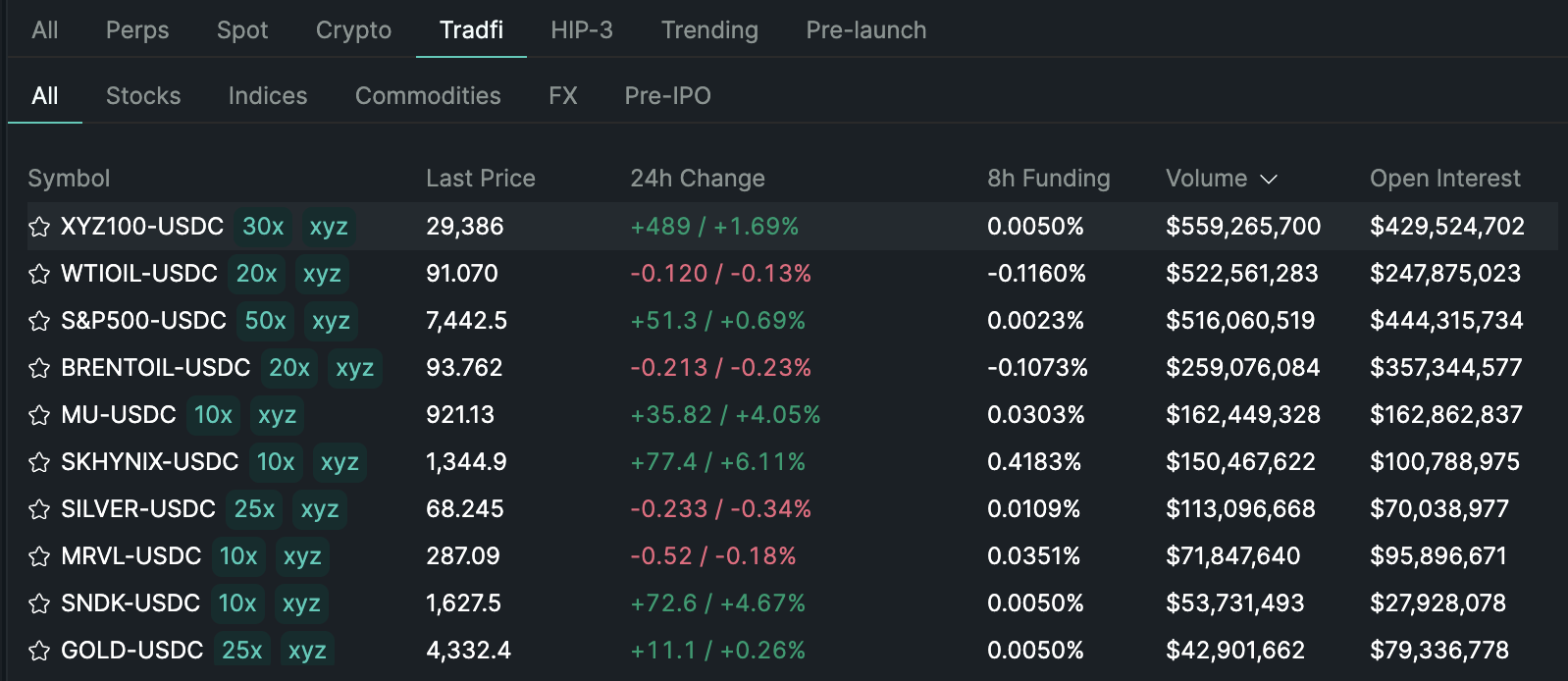
The primary challenge is pricing. Hyperliquid has shown that traditional assets can be turned into 24/7 perp markets, even when the underlying asset is closed overnight or over the weekend. Prices are kept broadly in check through oracle references, funding rates, market makers and the expectation that the perp eventually has to reconnect with the underlying market when it reopens.
A PSA 10 Charizard does not have that same infrastructure. Card prices are fragmented across auctions, marketplaces, vaults and private sales. A single abnormal sale could distort the market, making individual-card perps difficult and open to manipulation. The more realistic version would be index perps: baskets of liquid cards, sealed products or tokenised-card floors, with low leverage and heavy outlier filtering. A major deviation in one card’s selling price would have a much smaller impact inside a broader basket.
The RWA Endgame
Trading cards and crypto may be unusually well matched. Both were once dismissed as unserious gimmicks or pure speculation, and by some they still are. Yet both have built markets where scarcity, culture, liquidity and belief matter. Tokenised cards could become one of the clearest consumer-facing examples of real-world asset tokenisation: take an asset people already understand, put it onchain, make it liquid, and let the market price it in real time.
From there, the financial stack becomes obvious. Better liquidity improves price discovery. Better price discovery makes lending markets more viable. Lending creates collateral demand and stablecoin yield. Eventually, perpetual futures could complete the stack.
Gotta long ’em all.
Disclosure: This article is for informational and educational purposes only and does not constitute financial, investment, legal or tax advice. actionem alpha may hold positions in assets discussed. Readers should conduct their own research and consider their personal financial circumstances before making investment decisions. Crypto assets are highly volatile and readers may lose all their capital.
Referral Disclosure: This article contains referral links. If readers use these links, actionem alpha may receive referral rewards, subject to the relevant platform’s terms. Referral relationships are disclosed for transparency and should not be treated as financial advice, an endorsement that any platform is suitable for a particular reader, or a recommendation to trade or invest. Cryptoassets and derivatives can be high risk and may not be suitable for all readers.
Referral Links
For readers who choose to explore the platforms discussed, the referral links below may help support actionem alpha.
Hyperliquid
Referral link: https://app.hyperliquid.xyz/join/ACTIONEMALPHA
Collector Crypt
Referral link: https://gacha.collectorcrypt.com/r/sccutkxe1m06
Phygitals
Referral link: https://phygitals.com/invite/actionemalpha
Courtyard
Referral link: https://courtyard.io/invite/FBBSP3